After our first major traveling in Greece family adventure, we had realized that was not so difficult and trouble had managed to rular by the country in the company of our small and backpacks loaded with diapers.
The country hellene while also meeting our expectations, gave us a couple of Argentines friendship that today maintain, Paula and Hernan. As it could not be otherwise, proud of its wonderful country boys convinced us to go visit them to the Argentina.
We don't need too much effort to encourage us, six months after returning from Greece, we decided to prepare the mochis and propel us to our first adventure, this time the thing was serious, was challenging for some newbies like us with an 18-month-old baby to carry out a long trip.
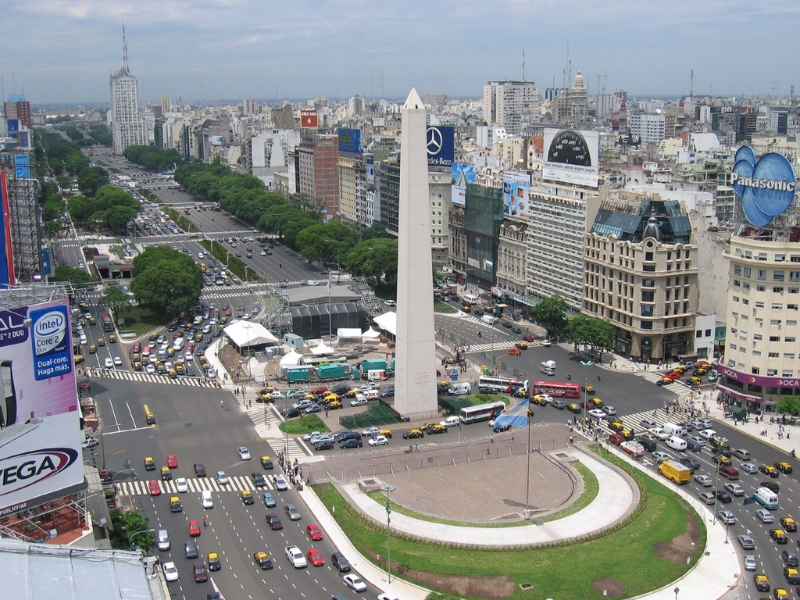
Many had read and heard about Buenos Aires, certainly a city that leaves no one indifferent. With all the enthusiasm in the world in May 2003 the 3 we went to conquer the Americas.
On this trip, the small already walked, that supposed to be sullied a mogollon, but wasn't any problem, they are laundromats.
After a long but quiet flight, we landed in the city of Buenos Aires early in the morning. There our friend waited us Hernan to take me to his house in the center of the city, specifically in the Callao Street. A beautiful building where the elevator directly let you inside the House and it all off had to Don Enrique, the goalkeeper who was always willing to help you.
The beautiful city of Buenos Aires that much reminded us to our beloved Barcelona, is located on the coast of the Río de la Plata, so wide that many travellers so confuse with the sea, has a mild climate and many days of sunshine per year. Natural region, green and humid landscape can enjoy in parks, on the outskirts or in the gigantic ecological reserve which is located just five minutes from the center of the city.
The city has 48 neighborhoods to explore. In each one there are bars, squares, football fields and other sports, temples, milongas and theatres. Buenos Aires is considered the fourth largest in world theatre and has more rooms than New York. Buenos Aires, traditional or modern, museums are famous. Tango music and dance, can be known in the more sophisticated tangueria or in a neighborhood popular milonga.
Alternative film, musicians, and designers are the origin of meetings and festivals. In Buenos Aires there are fairs and cultural activities throughout the year. Another of the passions of this city is undoubtedly football, with the national classic between the mouth and the River.
With more than 3,000 restaurants, eating here is a matter of choosing where and what.
From the typical, roast or pizza in the places called forks free, until the meal from any of the many communities that settled in the city during centuries of immigration. While eating the typical "invoices" at breakfast, drops filled mostly with dulce de leche, which incidentally, are very good!.
Not going you to believe, but it has been the only country where we
have returned with many kilos more, in one month we saw as our bodies
succumbed to the fabulous Buenos Aires cuisine!
To move around the city, there is a transport system with multiple options: six subway lines (thus the name of the underground is abbreviated), over a hundred bus lines (and called on Buenos Aires to the bus or buses) and railways (or trains) Intercity. Taxis and limos are a very common transport means, since they are safe and comparatively cheaper than in other cities.
In our visit to the city, we would highlight the following points which certainly seemed the most interesting.
District of San Telmo, one of the oldest and typical Buenos Aires neighborhoods.
Tango, bars and antiques. It is part of the historical case of Buenos Aires and is very close to the Plaza de Mayo. It is famous for the Antiques Fair (flea market) which takes place every Sunday in the Plaza Dorrego. The Bohemian life and tango are part of the atmosphere of the neighborhood, it still retains the essence of the old Buenos Aires. In San Telmo, it is possible to find a bar where you can listen to tango and drinking a coffee, wine or beer with the residents of the neighborhood. It is chosen by many artists and craftsmen to live and carry out their work.
Plaza de Mayo, is the historical, political and social Center of Buenos Aires. Plaza de Mayo is the place where citizens expressed their States of mind, from celebrations to protest and social claims. The official name of the district is Montserrat. You will find the Casa Rosada or the Government House and the building of the Cabildo. In it, apart from feeding the pigeons, we realized the shocking pink of the façade of the House where so many times in the film we have seen look out from the balcony to the enigmatic Evita Peron. Impressive is also listening to the cries of mothers who covering their heads with white handkerchiefs are not missing nor a single day to the appointment.
Plaza de Mayo, is the historical, political and social Center of Buenos Aires. Plaza de Mayo is the place where citizens expressed their States of mind, from celebrations to protest and social claims. The official name of the district is Montserrat. You will find the Casa Rosada or the Government House and the building of the Cabildo. In it, apart from feeding the pigeons, we realized the shocking pink of the façade of the House where so many times in the film we have seen look out from the balcony to the enigmatic Evita Peron. Impressive is also listening to the cries of mothers who covering their heads with white handkerchiefs are not missing nor a single day to the appointment.
The neighborhood of La Boca, is the most visited by tourists and at the same time is one of the poorest in the city. Its inhabitants have a marked sense of belonging to the district and often participate in various community activities. He was born as a natural port in the Creek. Since 1870, the mouth began to receive a large number of immigrants, mostly Italian (Genoese). Immigrants built their homes with sheets of zinc and painted them with paintings that unfilled in the workshops of the port, which is why the houses are very colorful, today this custom is maintained in some sectors of the district. The houses were called "conventillos", were collective housing where many families lived sharing common spaces.
Due to frequent floods and fires that used to happen in the "conventillos", a group of neighbors in 1884 created the first body of firemen volunteers of South America.
At night the area remains very lonely so caution is advised and care, the same day that there are parties at the Boca Stadium.
We went over it day and accompanied by our friend Hernan, while of Álvaro "chubby" and the "gordita" (very pregnant Nikolaki) Paula rested at home.
The so-called Street, the Caminito, is the most famous street of the neighborhood, the site where some painters sell their works to visitors. Caminito Street was born in 1950 when a group of residents, in which was the renowned painter Quinquela Martín, decided to recover abandoned land where the train passed. They cleaned up the place and after some arrangements he was baptized with the name of Caminito, in homage to the famous tango composed in 1926 by Juan de Dios Filiberto and Gabino Coria Peñaloza.
It is not possible to talk about neighborhood of the mouth without mentioning soccer. The Boca Juniors Football Club is perhaps more supporters from across Argentina soccer team. The headquarters of the club and its stadium is located in the heart of the neighborhood of La Boca. The stadium is affectionately known as "La Bombonera" since at the time of its opening, in 1940, it seemed a case of a few renowned chocolates.
As large fans that we are to this sport, we could not miss this visit. We were next to the Temple of that great player who often made us enjoy with their game, Diego Armando Maradona.
Visit the Recoleta district and its famous cemetery, Central and elegant, the Recoleta cemetery is a real Museum and it was declared historical heritage of the city, admission is free, or at least it was when we were. In its interior you can see important works of art by prominent sculptors Argentine and foreign. In the cemetery are the remains of important personalities of politics, culture, art and science argentina. "Evita Perón" is one of its illustrious guests.
A pleasant walk through Puerto Madero, in the offices of major companies and listed residences are located. There are also recognized restaurants, a University, luxurious hotels, museums and floating casino.
Puerto Madero is a district that pays homage to "the women". For this reason the streets carry names of women in science, the arts, politics and culture. The bridge of the woman, exclusively pedestrian are also and work of the famous Spanish architect Santiago Calatrava, is rotating to allow boats to pass. Several towers refer to the female sex. It has all a pedestrian area, around the different docks. A very nice to walk and enjoy the River area and open air.
The South Waterfront close to Puerto Madero, for many years the place was the Spa favorite of locals. Today is an important place of recreation, where ends the week many people attend sports activities, attend the fair or street performances. From its beginnings Puerto Madero became an important gastronomic Center that concentrates a large number of restaurants. In the also numerous carts where to taste the famous "choripán" are located
Breathe in the forests of Palermo, is another good option to get especially if visits the city with the children, they are composed of different parks and air public as the Galileo Galilei Planetarium, the Zoo, Botanical Garden, the Japanese garden, the Lake of race, the Tres de Febrero Park with the rose garden and Hipodromo Argentino de Palermo. Work about horse-drawn carriages to horses that are the typical vehicle for walks in the forests. To the carriages they are known as "Mateos".
The rose garden is one of the most beautiful parks of Palermo. It has a lake where you can rent boats for walks. In addition by a beautiful bridge is accessed to the rose garden featuring more than 18 thousand rosales.
Excursion to the town of Tiger, is located 33 km from the city of Buenos Aires. The town of El Tigre, is located on the banks of the Paraná River Delta. It has two railway stations, although it can also be reached by bus, we opted for the first option, we love to travel by train and whenever we have time we do.
To this day, we we wanted to give a stroll by the area enjoying a day in the open air and it was certainly worth it, under a beautiful blue sky we enjoyed the Paraná Delta which is the fifth largest in the world and the only one which leads to a fresh water course.
The Delta is composed of numerous rivers, streams and channels which form many islands. The city has a river station, where boats and catamarans can be taken to make long, beautiful walks. On the Islands there are different proposals to spend the day, picnic, roasted, or eat in restaurants.
The boat trip is highly recommended, you enjoy the views over the fabulous homes with spectacular gardens that surround the river. That day we were accompanied by the inseparable friend of Álvaro, a green creature called "Piti".

No hay comentarios:
Publicar un comentario